
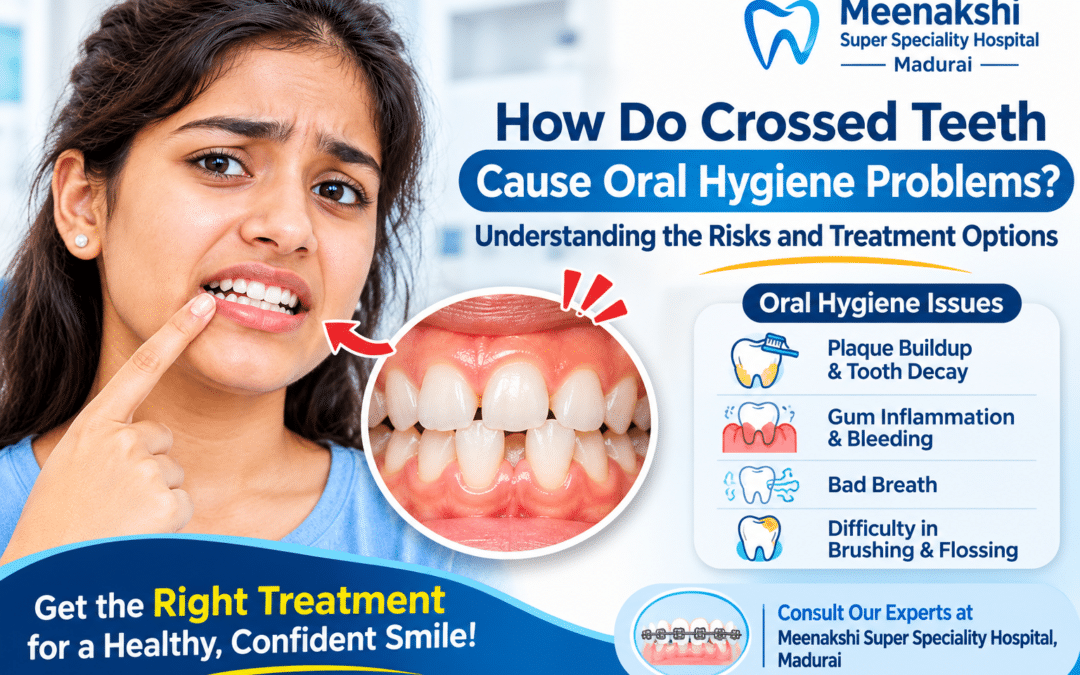
A healthy smile is not just about having straight, beautiful teeth. Properly aligned teeth also play an important role in maintaining good oral hygiene. When teeth overlap, twist, or grow out of their normal positions, cleaning them properly can become difficult. One such dental alignment problem is known as a crossed or misaligned tooth.
Crossed teeth can create spaces where food particles and harmful bacteria accumulate, increasing the risk of cavities, gum disease, and other oral health problems.
At Meenakshi Super Speciality Hospital, Madurai, Dr. Jibreel Oysul highlights the importance of identifying dental alignment problems early and maintaining proper oral hygiene to protect long-term dental health.
What Are Crossed Teeth?
Crossed teeth refer to a condition in which one or more teeth are positioned incorrectly in relation to the surrounding teeth. They may overlap, rotate, or sit outside their normal dental arch.
A related orthodontic condition is called a crossbite, which occurs when one or more upper teeth bite inside the corresponding lower teeth instead of outside them.
Crossed or crowded teeth can affect the appearance of your smile, bite alignment, chewing efficiency, and overall oral hygiene.
How Do Crossed Teeth Cause Oral Hygiene Problems?
Misaligned teeth can make everyday brushing and flossing more challenging. Here are some common oral health problems associated with crossed teeth.
1. Increased Plaque Accumulation
When teeth overlap or sit too close together, small spaces and irregular surfaces can develop between them.
These areas can trap food particles and bacteria, making plaque removal difficult. If plaque is not removed regularly, it can harden into tartar and contribute to gum inflammation.
2. Higher Risk of Tooth Decay
Overlapping teeth can create difficult-to-reach areas where food debris and bacteria accumulate.
When plaque remains on the tooth surface, bacteria produce acids that gradually damage the enamel, increasing the risk of dental cavities.
3. Gum Inflammation and Bleeding
Poorly aligned teeth can make it difficult to clean along the gumline and between teeth.
When plaque accumulates around the gums, it may cause gingivitis, with symptoms such as:
- Red or swollen gums.
- Bleeding while brushing or flossing.
- Gum tenderness.
- Persistent bad breath.
If left untreated, gum inflammation may progress to more serious periodontal problems.
4. Persistent Bad Breath
Food particles trapped between overlapping or crowded teeth can encourage bacterial growth.
These bacteria may release unpleasant-smelling compounds, resulting in persistent bad breath, also known as halitosis.
Maintaining proper oral hygiene and addressing dental alignment issues can help reduce this problem.
5. Difficulty in Brushing and Flossing
Proper brushing and flossing are essential for removing plaque and maintaining healthy teeth.
However, when teeth overlap or are rotated, toothbrush bristles and dental floss may not easily reach all surfaces.
This can leave certain areas inadequately cleaned, increasing the likelihood of cavities and gum disease.
6. Uneven Tooth Wear
Incorrect tooth positioning and bite relationships may cause certain teeth to experience excessive contact during chewing.
Over time, this may contribute to uneven tooth wear, sensitivity, and discomfort in some individuals.
What Causes Crossed or Misaligned Teeth?
Several factors can contribute to crossed teeth and other orthodontic alignment problems:
- Genetics: Jaw size, tooth size, and inherited dental characteristics can influence tooth alignment.
- Insufficient Jaw Space: When the jaw does not have enough space for all permanent teeth, crowding and overlapping may occur.
- Early Loss of Baby Teeth: Premature loss of primary teeth can affect the space available for permanent teeth.
- Prolonged Thumb Sucking: Certain childhood oral habits can influence tooth positioning and jaw development.
- Abnormal Tooth Eruption: Teeth that erupt in unusual positions may contribute to misalignment.
- Jaw Growth Differences: Differences in the development of the upper and lower jaws can contribute to bite problems such as crossbite.
How Can Crossed Teeth Be Corrected?
Treatment depends on the severity of the misalignment, the patient’s age, and the overall dental condition.
An orthodontic evaluation helps determine the most appropriate treatment.
1. Traditional Braces
Braces use brackets and wires to apply controlled pressure and gradually move teeth into their correct positions.
They are commonly used to correct crowded, overlapping, and rotated teeth, as well as certain bite problems.
2. Clear Aligners
Clear aligners are removable, transparent trays designed to move teeth gradually.
They may be suitable for selected cases of mild to moderate misalignment, depending on the complexity of the orthodontic problem.
3. Palatal Expanders
In certain growing children, an orthodontist may recommend a palatal expander to gradually widen the upper jaw.
This can help create additional space and correct some types of crossbite.
4. Retainers
After orthodontic correction, retainers help maintain the newly aligned tooth positions and reduce the risk of teeth shifting back.
Your orthodontist will recommend the appropriate type and wearing schedule.
Tips to Maintain Oral Hygiene If You Have Crossed Teeth
Even if your teeth are not perfectly aligned, following a consistent oral hygiene routine can help protect your dental health.
- Brush twice daily using a soft-bristled toothbrush.
- Use fluoride toothpaste to protect against tooth decay.
- Floss daily to clean between overlapping teeth.
- Consider interdental brushes or other cleaning aids if recommended by your dentist.
- Limit sugary foods and frequent snacking.
- Visit your dentist regularly for professional cleaning and dental examinations.
- Seek an orthodontic evaluation if you notice overlapping teeth or bite-related problems.
Frequently Asked Questions (FAQs)
- Can crossed teeth cause gum disease?
Yes. Overlapping and misaligned teeth can make plaque removal difficult. When plaque accumulates around the gumline, it can cause gingivitis and may contribute to periodontal disease if left untreated.
- Do crossed teeth increase the risk of cavities?
They can. Areas between overlapping teeth may trap food particles and plaque, making them harder to clean and increasing the risk of tooth decay.
- Can crossed teeth be corrected without braces?
Some mild alignment problems may be treated using clear aligners. However, the appropriate treatment depends on the severity and type of misalignment. An orthodontic consultation is necessary.
- Is a crossbite the same as crossed teeth?
Not exactly. Crossed teeth is a general description of incorrectly positioned teeth, whereas crossbite is a specific bite condition in which upper teeth bite inside the lower teeth.
- At what age should crossed teeth be treated?
Children should have their first orthodontic evaluation by around seven years of age, as recommended by orthodontic professionals. However, orthodontic treatment can also be beneficial for teenagers and adults.
Protect Your Smile with Proper Dental Alignment and Oral Hygiene
Crossed and misaligned teeth are not just cosmetic concerns. They can make brushing and flossing difficult, increase plaque accumulation, and contribute to cavities and gum problems.
Early diagnosis, appropriate orthodontic treatment, and consistent oral hygiene practices can help prevent these complications and maintain a healthy smile.
At Meenakshi Super Speciality Hospital, Madurai, Dr. Jibreel Oysul emphasizes the importance of proper dental alignment and preventive oral care.
If you have overlapping teeth, difficulty cleaning between your teeth, or bite alignment concerns, consult a dental professional for an evaluation and personalized treatment guidance.
Book your dental consultation at Meenakshi Super Speciality Hospital, Madurai, and take a step towards healthier teeth and gums!