

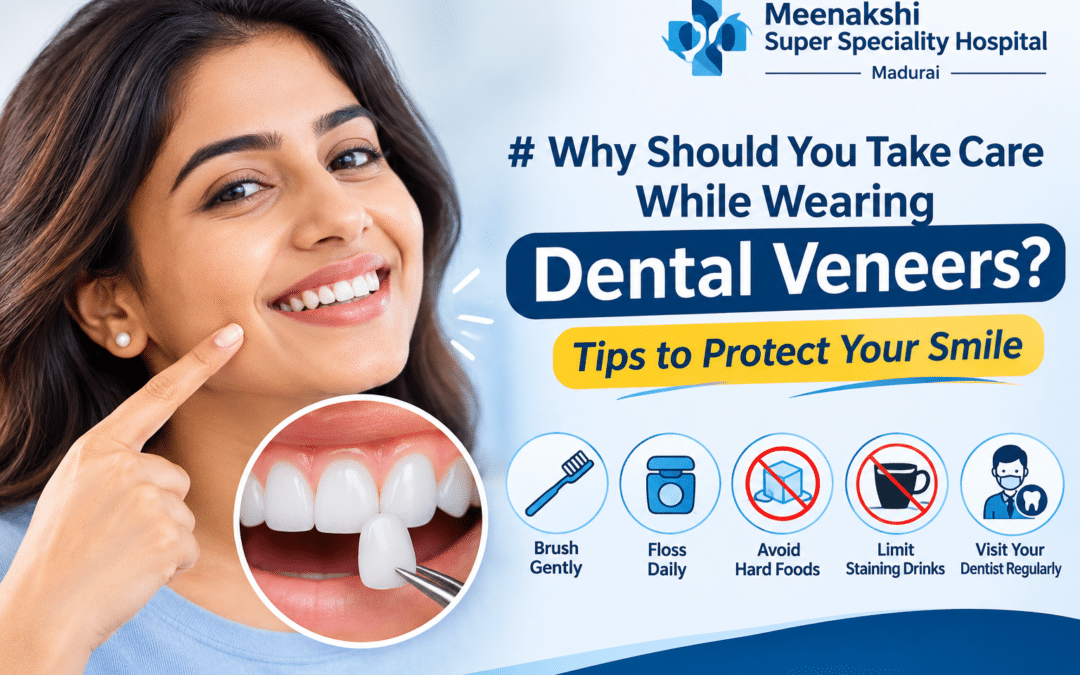
A beautiful smile can boost your confidence and make a lasting impression. Dental veneers are one of the popular cosmetic dental treatments used to improve the appearance of teeth by correcting discolouration, gaps, minor misalignment, and uneven tooth shapes.
However, getting dental veneers is only the first step. Taking proper care of them is equally important to maintain their appearance, durability, and functionality.
If you have recently undergone veneer treatment or are planning to get veneers, understanding how to care for them can help protect your investment and keep your smile looking beautiful for years.
At Meenakshi Super Speciality Hospital, Madurai, under the guidance of Dr Jibreel Oysul, patients can receive professional dental guidance and care for maintaining healthy, confident smiles.
What Are Dental Veneers?
Dental veneers are thin, customised coverings placed on the front surface of teeth to improve their appearance. They are commonly made from porcelain or composite resin materials.
Veneers can help address several cosmetic dental concerns, including:
- Yellow or permanently stained teeth.
- Small gaps between teeth.
- Chipped or worn-down teeth.
- Uneven tooth shapes and sizes.
- Minor alignment irregularities.
With proper planning and maintenance, dental veneers can provide a natural-looking and attractive smile.
Why Is It Important to Take Care of Dental Veneers?
Although dental veneers are designed to be durable, they are not completely resistant to damage. Improper habits, excessive biting forces, and poor oral hygiene can affect their condition.
Taking care of your veneers is important for the following reasons:
1. To Prevent Cracks and Damage
Veneers are strong, but biting hard objects can cause them to chip or crack.
Avoid biting:
- Ice cubes.
- Hard candies.
- Nuts with their shells.
- Pen caps and other non-food objects.
- Very hard food directly with your front teeth.
Cutting hard foods into smaller pieces can help reduce unnecessary pressure on veneers.
2. To Maintain Their Natural Appearance
Porcelain veneers are generally stain-resistant, but composite veneers can be more susceptible to staining.
Frequent consumption of coffee, tea, red wine, and tobacco products may affect the appearance of natural teeth and composite veneers.
Maintaining good oral hygiene and limiting staining substances can help preserve your smile.
3. To Protect Your Natural Teeth and Gums
Veneers cover only the front surface of your teeth. The remaining natural tooth structure and surrounding gums still need regular care.
Poor oral hygiene can lead to plaque accumulation, gum inflammation, and tooth decay around the edges of veneers.
Brush and floss regularly to maintain healthy gums and protect your natural teeth.
4. To Avoid Veneer Loosening
Chewing hard objects, biting fingernails, and applying excessive pressure can sometimes cause veneers to loosen or become detached.
If you notice any movement or changes in your veneers, consult your dentist instead of trying to fix them yourself.
5. To Increase the Lifespan of Veneers
Dental veneers can last for many years, depending on the material used, oral hygiene, biting habits, and regular dental maintenance.
Following your dentist’s instructions and attending routine check-ups can help extend their lifespan.
7 Important Tips to Take Care of Your Dental Veneers
Here are some simple habits you should follow after getting dental veneers:
- Brush Twice Daily
Use a soft-bristled toothbrush and non-abrasive fluoride toothpaste to clean your teeth gently. Avoid aggressive brushing.
- Floss Every Day
Flossing helps remove food particles and plaque between your teeth, especially around the edges of veneers.
- Avoid Biting Hard Objects
Do not use your front teeth to bite ice, hard candies, pens, or other hard objects. These habits can damage veneers.
- Limit Staining Foods and Drinks
Reduce excessive consumption of coffee, tea, and other strongly coloured beverages, particularly if you have composite veneers.
- Avoid Smoking and Tobacco
Smoking and tobacco can stain natural teeth, affect gum health, and compromise your overall oral health.
- Wear a Night Guard if Recommended
If you grind or clench your teeth while sleeping, your dentist may recommend a customised night guard to protect your veneers from excessive pressure.
- Visit Your Dentist Regularly
Regular dental check-ups help identify early signs of damage, gum problems, or changes around your veneers.
What Should You Do If Your Dental Veneer Gets Damaged?
If your veneer becomes chipped, cracked, loose, or detached, do not ignore the problem.
Follow these steps:
- Avoid chewing on the affected tooth.
- Do not attempt to reattach the veneer using household glue.
- Keep the detached veneer safely if it comes off completely.
- Contact your dentist for an examination.
- Follow the recommended repair or replacement treatment.
Early dental attention can help prevent further damage to the underlying tooth.
How Long Do Dental Veneers Last?
The lifespan of dental veneers depends on the material, placement technique, oral hygiene, and individual habits.
- Porcelain veneers: Often last around 10–15 years or longer with proper care.
- Composite veneers: Generally last around 5–7 years, depending on maintenance and wear.
These are approximate ranges, not guarantees. Regular dental visits and proper care play an important role in maintaining veneers.
Get Expert Dental Care at Meenakshi Super Speciality Hospital, Madurai
Dental veneers can transform your smile, but maintaining them requires consistent care and professional guidance.
Dr Jibreel Oysul at Meenakshi Super Speciality Hospital, Madurai, provides dental care and guidance to help patients maintain healthy teeth and beautiful smiles.
Whether you are considering dental veneers or already have them, following the right oral hygiene practices and attending regular dental check-ups can help protect your smile.
Take care of your veneers today for a healthier, more confident smile tomorrow!
Book your dental consultation at Meenakshi Super Speciality Hospital, Madurai.