

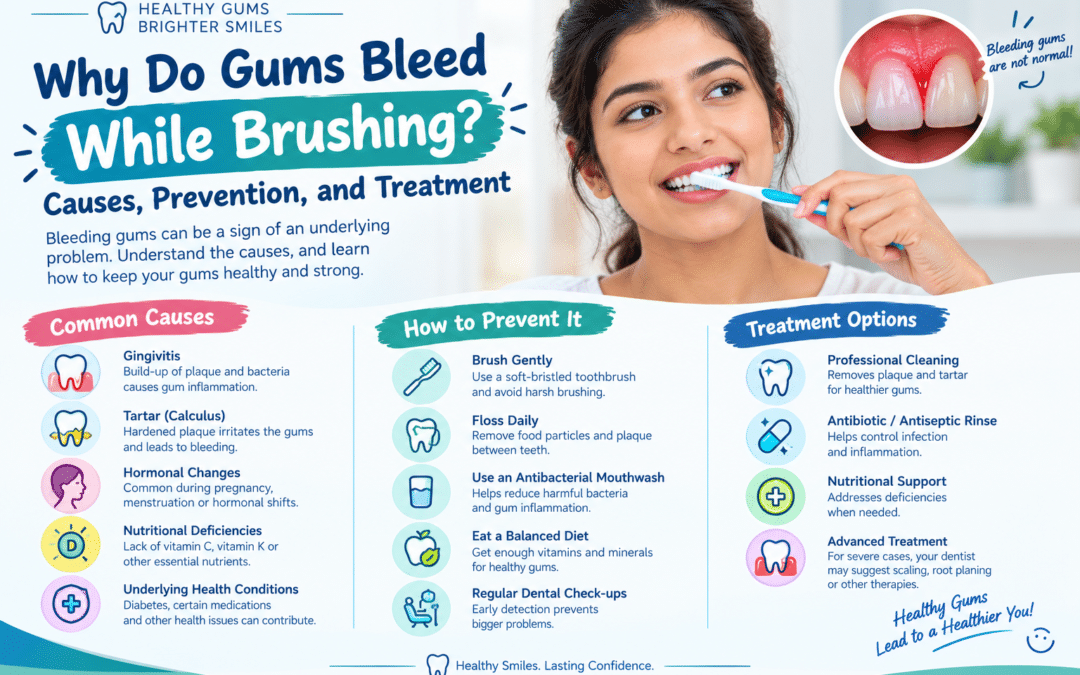
Have you ever noticed blood on your toothbrush or in the sink while brushing your teeth? Bleeding gums are a common oral health concern that should not be ignored. Although occasional bleeding may seem harmless, frequent or persistent gingival bleeding can indicate an underlying gum problem that requires dental attention.
Understanding the causes of bleeding gums and following proper oral hygiene practices can help protect your gums and maintain a healthy smile.
What Causes Gums to Bleed While Brushing?
Several factors can contribute to gingival bleeding, including:
- Gingivitis (Early Gum Disease)
Gingivitis is one of the most common causes of bleeding gums. It occurs when plaque, a sticky film of bacteria, accumulates along the gumline. This can cause inflammation, redness, swelling, and bleeding during brushing or flossing.
The good news is that gingivitis can often be reversed with proper oral hygiene and professional dental cleaning.
- Brushing Too Hard
Using excessive force while brushing or choosing a hard-bristled toothbrush can irritate the gums and cause bleeding. Brushing gently with a soft-bristled toothbrush helps clean your teeth effectively while reducing gum irritation.
- Poor Oral Hygiene
Inadequate brushing and failure to clean between the teeth allow plaque to accumulate. Over time, plaque can harden into tartar, which cannot be removed by regular brushing alone and may contribute to gum inflammation.
- Periodontitis (Advanced Gum Disease)
When gingivitis is left untreated, it may progress to periodontitis, a more serious condition that affects the tissues and bone supporting the teeth. Symptoms may include persistent gum bleeding, bad breath, gum recession, loose teeth, and discomfort while chewing.
Early dental evaluation is essential to prevent further damage.
- Vitamin Deficiencies
Deficiencies in certain nutrients, particularly vitamin C and vitamin K, can contribute to bleeding problems. A balanced diet containing fruits, vegetables, and other nutrient-rich foods supports healthy gums and overall oral health.
- Hormonal Changes and Medical Conditions
Hormonal changes during pregnancy, puberty, or other stages of life can make gums more sensitive to plaque. Certain medical conditions, including blood-clotting disorders, and some medications, such as blood thinners, may also increase the likelihood of gum bleeding.
If bleeding is frequent, unexplained, or accompanied by other symptoms, consult a healthcare professional.
How Can You Prevent Gums from Bleeding?
You can reduce the risk of gum bleeding by following these simple oral care practices:
- Brush twice daily: Use a soft-bristled toothbrush and gentle circular movements.
- Clean between your teeth: Use dental floss or an interdental cleaner daily.
- Maintain a balanced diet: Include fruits, vegetables, and foods rich in essential vitamins.
- Avoid tobacco: Smoking and other tobacco products can increase the risk of gum disease.
- Schedule regular dental check-ups: Professional cleaning helps remove hardened tartar and allows early detection of gum problems.
- Do not stop brushing because of bleeding: Continue gentle cleaning unless your dentist advises otherwise.
When Should You Consult a Dentist?
Occasional gum irritation may improve with better brushing techniques. However, you should consult a dentist if:
- Your gums bleed repeatedly while brushing or flossing.
- Your gums appear red, swollen, or tender.
- You experience persistent bad breath.
- Your gums are receding or your teeth feel loose.
- Bleeding occurs without an obvious cause or is accompanied by easy bruising or bleeding elsewhere.
Heavy bleeding that does not stop, or gum bleeding accompanied by significant weakness or other concerning symptoms, requires prompt medical attention.
How Is Gingival Bleeding Treated?
Treatment depends on the underlying cause. Your dentist may recommend professional scaling to remove plaque and tartar, improved oral hygiene techniques, or further periodontal treatment if advanced gum disease is present.
If a medical condition, nutritional deficiency, or medication is suspected, additional evaluation may be necessary. Do not stop prescribed medication without consulting your treating doctor.
Conclusion
Bleeding gums while brushing are not something to ignore. They may be an early warning sign of gum disease, but timely care and consistent oral hygiene can help prevent complications and preserve your natural teeth.
Dr Jibreel Oysul at Meenakshi Super Speciality, Madurai, encourages individuals experiencing persistent gum bleeding to seek professional dental evaluation and take proactive steps towards better oral health.
A healthy smile begins with healthy gums. Do not wait for the symptoms to worsen before seeking dental care.