

Introduction
Completing braces treatment is an exciting milestone on the journey to a straighter, healthier smile. However, maintaining the results requires continued care even after your braces are removed. This is where dental retainers play an important role.
Retainers are custom-made dental appliances designed to keep your teeth in their corrected positions after orthodontic treatment. Without proper retainer use, teeth can gradually shift back towards their original positions, a process known as orthodontic relapse.
At Meenakshi Super Speciality Hospital, Madurai, Dr. Jibreel Oysul emphasizes the importance of following your orthodontist’s recommendations to maintain the results of braces treatment and enjoy a confident smile for years to come.
Why Are Retainers Important After Braces Treatment?
After braces are removed, the surrounding gums, bone and supporting tissues need time to adapt to the new positions of your teeth. During this period, teeth may move if they are not adequately supported.
Wearing retainers as recommended helps to:
- Maintain teeth alignment: Prevent teeth from shifting after braces treatment.
- Preserve your smile: Help maintain the results achieved through orthodontic treatment.
- Reduce the risk of relapse: Minimize the chances of teeth returning towards their previous positions.
- Maintain your bite: Help preserve the corrected relationship between your upper and lower teeth.
- Protect your investment: Support the long-term results of your orthodontic treatment.
What Are the Different Types of Dental Retainers?
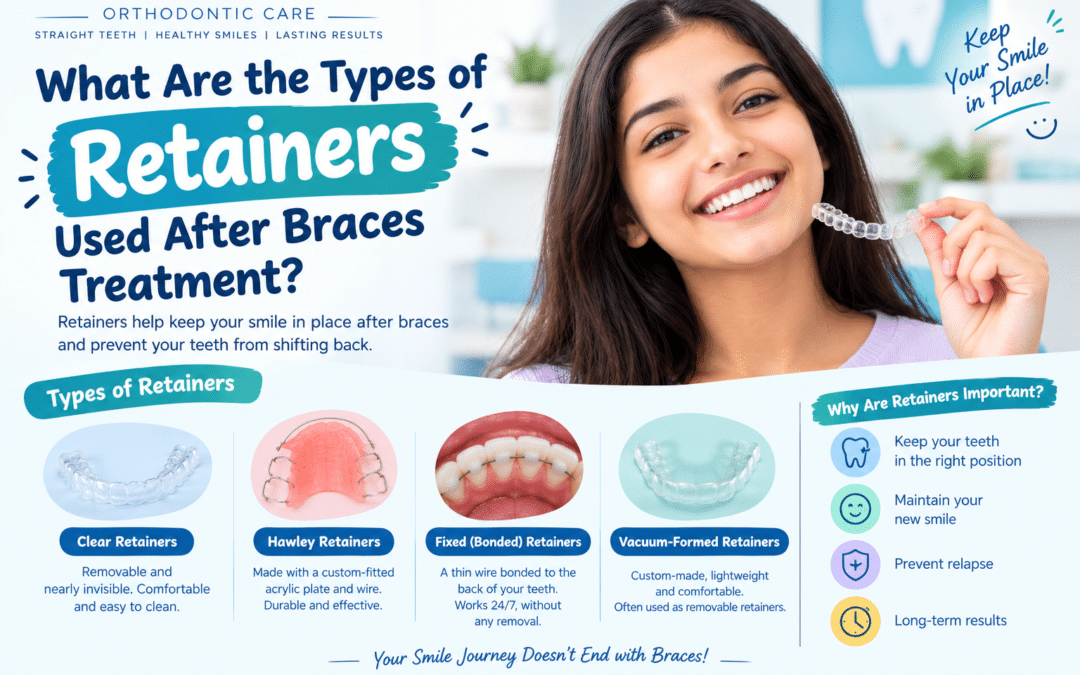
Retainers are generally classified into two main categories: removable retainers and fixed retainers. Your orthodontist will recommend the most suitable option based on your dental condition, treatment results and lifestyle.
- Hawley Retainers
Hawley retainers are traditional removable retainers made from an acrylic base that fits against the roof of the mouth or behind the lower teeth, along with a metal wire that helps hold the teeth in position.
Advantages:
- Durable and long-lasting with proper care.
- Can be removed for eating and cleaning.
- Can be adjusted by a dental professional when necessary.
- Allow the teeth to maintain their alignment while supporting oral hygiene.
Things to consider: Hawley retainers are more noticeable than clear retainers, and the metal wire may affect speech temporarily while you adjust to wearing them.
- Clear Plastic Retainers
Clear retainers are transparent, removable appliances custom-made to fit closely over your teeth. They are often made from thin, durable plastic materials and are designed to maintain the alignment achieved after braces treatment.
Advantages:
- Nearly invisible when worn.
- Comfortable and lightweight for many patients.
- Easy to remove for meals and brushing.
- Suitable for people who prefer a discreet option.
Things to consider: Clear retainers can crack, wear out, become distorted with heat or get lost. They need regular cleaning and replacement when recommended by your orthodontist.
- Fixed or Bonded Retainers
Fixed retainers consist of a thin wire bonded to the inner surfaces of selected teeth, commonly the lower front teeth. Because they remain attached, patients do not need to remember to insert or remove them every day.
Advantages:
- Provide continuous retention.
- Are hidden behind the teeth and are not usually visible when smiling.
- Do not depend on remembering to wear a removable appliance.
- Can be particularly useful for teeth that are more prone to shifting.
Things to consider: Cleaning around the wire requires extra care. Plaque and food particles can accumulate around the bonded areas, increasing the risk of gum inflammation and tartar buildup. Regular dental check-ups are important to ensure the wire remains intact.
Which Type of Retainer Is Best for You?
There is no single retainer that is ideal for everyone. The right choice depends on your orthodontic needs, oral hygiene habits and the likelihood of your teeth shifting.
| Retainer type | Best-known feature |
| Hawley retainer | Durable and adjustable |
| Clear plastic retainer | Transparent and discreet |
| Fixed retainer | Continuous retention without daily removal |
In some cases, an orthodontist may recommend a combination of fixed and removable retainers to provide additional support. Your dentist will assess your teeth and bite before deciding on the most appropriate option.
How Long Should You Wear Your Retainer?
The duration of retainer use varies from person to person. Many patients need to wear their retainers regularly for an initial period and then continue wearing them at night over the long term.
Your orthodontist will provide a personalized wearing schedule based on your treatment outcome and the risk of relapse. Do not stop wearing your retainer simply because your teeth appear straight.
Consistent retainer use is essential because teeth can continue to move throughout life, even years after braces treatment.
Tips to Take Care of Your Dental Retainer
Proper retainer care helps maintain its condition and supports good oral hygiene.
- Clean it regularly: Follow your dentist’s instructions for cleaning your specific type of retainer.
- Avoid hot water: Hot water can distort clear plastic retainers.
- Store it safely: Keep removable retainers in their protective case when not in use.
- Maintain oral hygiene: Brush and floss regularly, paying special attention to areas around fixed retainers.
- Attend follow-up appointments: Have your retainer checked for damage, fit and effectiveness.
- Report changes promptly: Contact your dentist if your retainer becomes loose, cracks, feels unusually tight or no longer fits properly.
Never force a retainer into place if it does not fit comfortably. Seek advice from your orthodontist instead.
What Happens If You Stop Wearing Your Retainer?
Stopping retainer use may allow your teeth to shift gradually, potentially affecting the alignment achieved through braces treatment. If your retainer feels tight after a period of not wearing it, your teeth may have moved.
Contact your orthodontist for an assessment rather than forcing the retainer to fit. Depending on the amount of tooth movement, you may need a replacement retainer or further orthodontic treatment.
Conclusion
Dental retainers are an essential part of maintaining the results of braces treatment. Whether you choose a Hawley retainer, a clear plastic retainer or a fixed bonded retainer, following your orthodontist’s instructions is key to preserving your smile.
At Meenakshi Super Speciality Hospital, Madurai, Dr. Jibreel Oysul highlights the importance of regular dental follow-ups, proper retainer care and long-term commitment to maintaining teeth alignment.
If you have recently completed braces treatment or are planning orthodontic care, consult a dental professional to understand which retainer is right for you.
Book a dental consultation at Meenakshi Super Speciality Hospital, Madurai, to learn more about maintaining your smile after braces treatment.
Frequently Asked Questions (FAQs)
- What is the most common type of retainer used after braces?
Clear plastic retainers, Hawley retainers and fixed retainers are commonly used. The appropriate option depends on your individual orthodontic needs.
- Are clear retainers better than metal retainers?
Clear retainers are less noticeable, while Hawley retainers are generally durable and adjustable. Neither is universally better; your orthodontist can recommend the right option for you.
- Can I eat while wearing my retainer?
Removable retainers should generally be taken out before eating. With fixed retainers, you can usually eat normally, but it is advisable to avoid very hard or sticky foods that could damage the wire.
- Do I need to wear my retainer forever?
Many people need long-term, often lifelong, retainer use to maintain their teeth alignment. Your orthodontist will recommend an appropriate schedule.
- What should I do if I lose my retainer?
Contact your orthodontist as soon as possible. Delaying replacement may allow your teeth to shift.
- How often should I replace my retainer?
There is no fixed replacement interval for everyone. Replacement depends on wear, damage, fit and the type of retainer. Your dentist can advise when a new one is needed.