

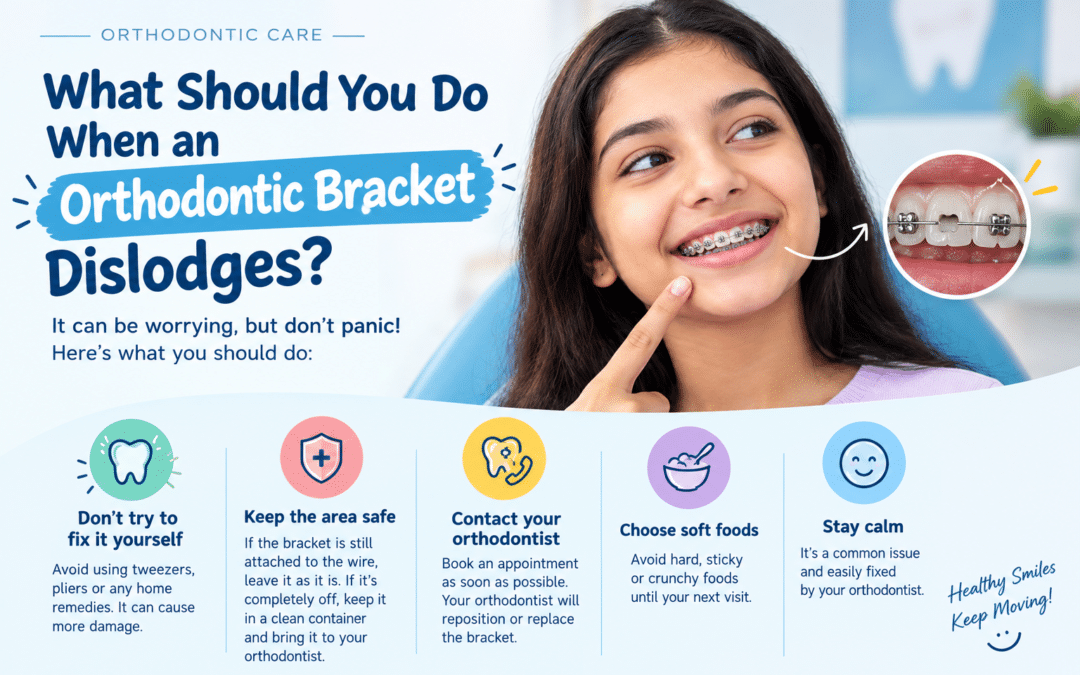
Orthodontic braces help straighten teeth, correct bite problems, and improve your smile. However, during orthodontic treatment, a bracket may sometimes become loose or dislodge from a tooth. This can happen while eating hard or sticky foods, due to accidental impact, or because of pressure on the braces.
Although a loose bracket is not usually a dental emergency, it is important to handle it correctly to prevent discomfort and avoid delays in your orthodontic treatment.
What Is an Orthodontic Bracket?
An orthodontic bracket is a small attachment bonded to the surface of each tooth. It holds the orthodontic wire in place, allowing controlled pressure to move teeth gradually into their desired positions.
When a bracket becomes loose or detaches from the tooth, it may no longer apply the intended pressure. This can affect treatment progress if left unaddressed.
What Should You Do If an Orthodontic Bracket Dislodges?
- Stay Calm and Check the Bracket
If you notice that a bracket has come loose, do not panic. Check whether it is still attached to the orthodontic wire or has completely detached from the tooth. Avoid pulling or twisting it, as this may cause further damage to the braces.
- Avoid Touching or Pulling the Bracket
Do not attempt to remove, reattach, or adjust the bracket yourself. If it is still connected to the wire, leave it in place if it is not causing discomfort. If it is loose and rubbing against your cheek or gums, contact your orthodontist for advice.
- Use Orthodontic Wax for Comfort
If the loose bracket or wire irritates the inside of your cheek or lips, orthodontic wax can help. Gently dry the affected area and place a small amount of wax over the irritating part. This provides a temporary protective barrier until you can see your orthodontist.
- Avoid Hard and Sticky Foods
Until the bracket is repaired, choose soft foods that require minimal chewing. Avoid hard foods such as nuts, ice, and hard candies, as well as sticky foods such as chewing gum and toffees. These foods may worsen the problem or dislodge additional brackets.
- Maintain Good Oral Hygiene
Continue brushing gently with a soft-bristled toothbrush and cleaning carefully around the braces. Food particles can collect around loose brackets, increasing plaque buildup and the risk of gum irritation. If brushing is uncomfortable, take extra care around the affected tooth rather than skipping oral hygiene.
- Contact Your Orthodontist
Inform your orthodontist as soon as possible and arrange an appointment for assessment and repair. Even if there is no pain, a dislodged bracket may interfere with the planned movement of your teeth. Your orthodontist will determine whether the bracket can be rebonded or needs replacement.
What Should You Avoid When a Bracket Comes Loose?
If an orthodontic bracket dislodges, avoid the following:
- Do not use glue or household adhesives to reattach the bracket.
- Do not cut the orthodontic wire or pull out the bracket yourself.
- Do not ignore the problem until your next routine appointment without informing your orthodontist.
- Avoid foods that could place additional pressure on the braces.
- Do not continue adjusting the bracket with your fingers or sharp objects.
If the bracket comes completely off, keep it in a clean container and bring it to your dental appointment if possible.
When Should You Seek Immediate Dental Attention?
A loose bracket without significant discomfort can usually be managed temporarily until your orthodontic appointment. However, seek prompt professional care if you experience severe pain, significant bleeding, swelling, or a wire that is deeply embedded in the soft tissues.
If a bracket or another part of the braces is inhaled or causes choking or breathing difficulty, seek emergency medical attention immediately.
How Can You Prevent Orthodontic Brackets from Dislodging?
You can reduce the risk of bracket damage by following these simple precautions:
- Follow your orthodontist’s dietary recommendations.
- Cut firm foods into small pieces instead of biting directly into them.
- Avoid biting nails, chewing pens, or using your teeth to open packages.
- Brush and floss regularly using orthodontic cleaning aids as recommended.
- Wear a mouthguard during contact sports if advised by your orthodontist.
- Attend scheduled orthodontic appointments to monitor your treatment progress.
Conclusion
A dislodged orthodontic bracket is a common issue during braces treatment, but proper care can help prevent further discomfort and treatment delays. Stay calm, avoid attempting repairs at home, protect any irritated areas with orthodontic wax, and contact your orthodontist for appropriate care.
At Meenakshi Super Speciality Hospital, Madurai, patients can seek professional dental guidance for orthodontic concerns and maintaining good oral health.
Consult Dr. Jibreel Oysul at Meenakshi Super Speciality Hospital, Madurai, for professional guidance on dental and orthodontic concerns.