
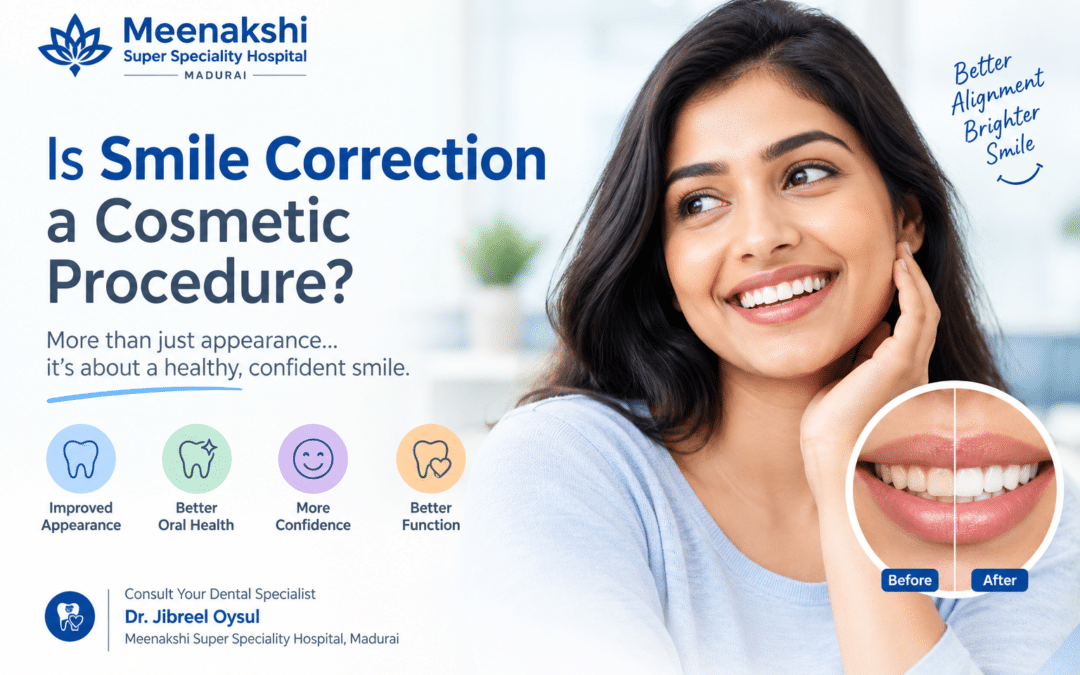
A smile is an important part of our appearance and communication. When people are unhappy with the appearance of their teeth or smile, they may consider smile correction to improve their confidence and overall dental appearance.
But is smile correction purely a cosmetic procedure? Not always. Depending on the individual’s dental condition and treatment needs, smile correction can involve both cosmetic and functional dental care.
What Is Smile Correction?
Smile correction refers to a range of dental treatments designed to improve the appearance, alignment, shape, colour, or overall harmony of a person’s smile.
Depending on the patient’s needs, treatment may include:
- Teeth alignment and orthodontic treatment
- Invisalign or clear aligners
- Dental veneers
- Dental bonding
- Teeth whitening
- Replacement of missing teeth
- Dental crowns or bridges
- Gum contouring
- Treatment of worn, chipped, or damaged teeth
The appropriate treatment depends on the condition of the teeth, gums, bite, and overall oral health.
Is Smile Correction Cosmetic?
Some smile correction procedures are primarily cosmetic. For example, teeth whitening or veneers may be recommended mainly to improve the appearance of the smile.
However, some treatments can provide both aesthetic and functional benefits.
For example, correcting crooked or crowded teeth may improve the appearance of the smile while also making the teeth easier to clean. Correcting certain bite problems may help improve chewing function and reduce uneven pressure on the teeth.
Similarly, replacing missing teeth can restore the appearance of the smile while also supporting chewing and oral function.
Therefore, smile correction should not always be considered just a cosmetic procedure. The treatment approach depends on the underlying dental condition and the patient’s individual goals.
Why Is a Dental Evaluation Important?
Before starting smile correction, a comprehensive dental examination is important. A dentist evaluates the teeth, gums, bite, jaw relationship, and overall oral health.
If problems such as tooth decay, gum disease, infection, or other dental conditions are present, they may need to be addressed before aesthetic treatment begins.
A personalised evaluation helps determine:
- What is affecting the appearance of the smile
- Whether there are underlying oral health concerns
- Which treatment options are suitable
- Whether the treatment is primarily aesthetic, functional, or both
- What results can realistically be expected
Smile Correction Is About More Than Appearance
A healthy and attractive smile can contribute to self-confidence, but good dental treatment should also consider oral health and function.
For some patients, smile correction may simply involve improving tooth colour or shape. For others, it may involve correcting alignment, bite, missing teeth, or other dental concerns.
The goal is to create a smile that is healthy, balanced, functional, and aesthetically pleasing.
Who Can Consider Smile Correction?
Smile correction may be considered by people who have concerns such as:
- Crooked or crowded teeth
- Gaps between teeth
- Discoloured teeth
- Chipped or worn teeth
- Uneven tooth shape
- Missing teeth
- Certain bite-related concerns
- A smile they feel uncomfortable or less confident about
However, not every treatment is suitable for everyone. A dental consultation is essential to identify the most appropriate option.
Final Thoughts
So, is smile correction a cosmetic procedure?
The answer is: it can be, but it is not always purely cosmetic.
While some procedures focus mainly on improving the appearance of the smile, others can address both aesthetic and functional dental concerns. The right approach depends on your individual dental health, facial features, bite, and treatment goals.
If you are considering smile correction, consult a qualified dental professional for a personalised assessment rather than choosing a treatment based only on appearance.
Dr. Jibreel Oysul
Meenakshi Super Speciality Hospital, Madurai
For professional dental evaluation and guidance on smile correction, consult your dental specialist to understand which treatment option is appropriate for you.