

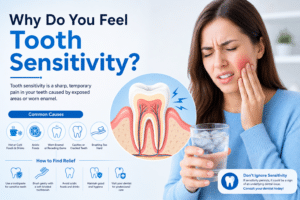
Have you ever experienced a sudden, sharp pain when drinking something cold, eating hot food, or enjoying something sweet? This is known as tooth sensitivity, and it is a common dental concern.
While occasional sensitivity may seem harmless, frequent or worsening sensitivity can sometimes indicate an underlying dental problem that needs attention.
At Meenakshi Super Speciality Hospital, Madurai, Dr. Jibreel Oysul and the dental team focus on identifying the cause of sensitivity and providing appropriate treatment to protect your teeth and oral health.
What Causes Tooth Sensitivity?
To understand sensitivity, it helps to know a little about the structure of your tooth.
The outer layer of the tooth is called enamel. Underneath it is a softer layer called dentin, which contains tiny channels that connect toward the nerves inside the tooth.
When the protective enamel or gum tissue is lost, dentin can become exposed. Hot, cold, sweet, or acidic foods and drinks can then stimulate the nerves, resulting in a sharp, temporary sensation.
- Enamel Wear
Brushing too aggressively, using an abrasive toothpaste, or frequently consuming acidic foods and drinks can contribute to enamel wear. Once enamel becomes thinner, the underlying dentin may become exposed and sensitivity can occur.
- Gum Recession
When gums recede, the root surfaces of teeth can become exposed. Unlike the crown of the tooth, the root does not have the same protective enamel covering, making it more vulnerable to sensitivity.
- Tooth Decay
A cavity can cause sensitivity, particularly when eating sweet, hot, or cold foods. If sensitivity is caused by decay, treating the affected tooth is important to prevent the problem from progressing.
- Cracked or Damaged Teeth
A cracked or damaged tooth may cause sensitivity, especially when chewing or consuming hot or cold foods. A dental examination can help identify the cause.
- Recent Dental Treatment
Some people experience temporary sensitivity after procedures such as fillings, teeth cleaning, or other dental treatments. If the sensitivity persists or becomes severe, it is advisable to consult your dentist.
- Teeth Grinding
Grinding or clenching your teeth can put excessive pressure on the teeth and contribute to enamel wear. Over time, this may increase sensitivity.
What Can Trigger Tooth Sensitivity?
Sensitivity can be triggered by:
- Cold water, ice cream, or chilled drinks
- Hot tea, coffee, or food
- Sweet foods and beverages
- Acidic foods and drinks
- Brushing or flossing around sensitive areas
- Cold air in some cases
The sensation is often sharp and short-lived, but persistent or severe pain should not be ignored.
How Can You Reduce Tooth Sensitivity?
Simple changes to your daily oral-care routine may help:
- Use a soft-bristled toothbrush.
- Brush gently rather than applying excessive pressure.
- Consider a toothpaste formulated for sensitive teeth if recommended by your dentist.
- Limit frequent consumption of acidic foods and drinks.
- Maintain good oral hygiene to prevent tooth decay and gum disease.
- Do not ignore persistent dental pain or sensitivity.
- Visit your dentist regularly for check-ups.
When Should You See a Dentist?
You should consider a dental consultation if:
- Sensitivity occurs frequently.
- The pain is severe or lasts for a long time.
- Sensitivity affects only one particular tooth.
- You experience pain while biting or chewing.
- You notice a visible cavity, crack, or chipped tooth.
- Your gums are bleeding, swollen, or receding.
- Sensitivity is getting worse despite improving your oral-care routine.
A dental examination can help determine whether the sensitivity is related to enamel wear, gum recession, decay, a cracked tooth, or another dental condition.
Don’t Let Tooth Sensitivity Limit Your Smile
Tooth sensitivity is common, but it is not something you have to live with. Identifying the underlying cause is important because treatment depends on what is causing the sensitivity.
At Meenakshi Super Speciality Hospital, Madurai, Dr. Jibreel Oysul provides dental evaluation and guidance to help patients understand the cause of their symptoms and choose appropriate treatment.
Experiencing frequent tooth sensitivity? Don’t ignore the warning signs. Consult a dental professional and take the first step toward a healthier, more comfortable smile.