

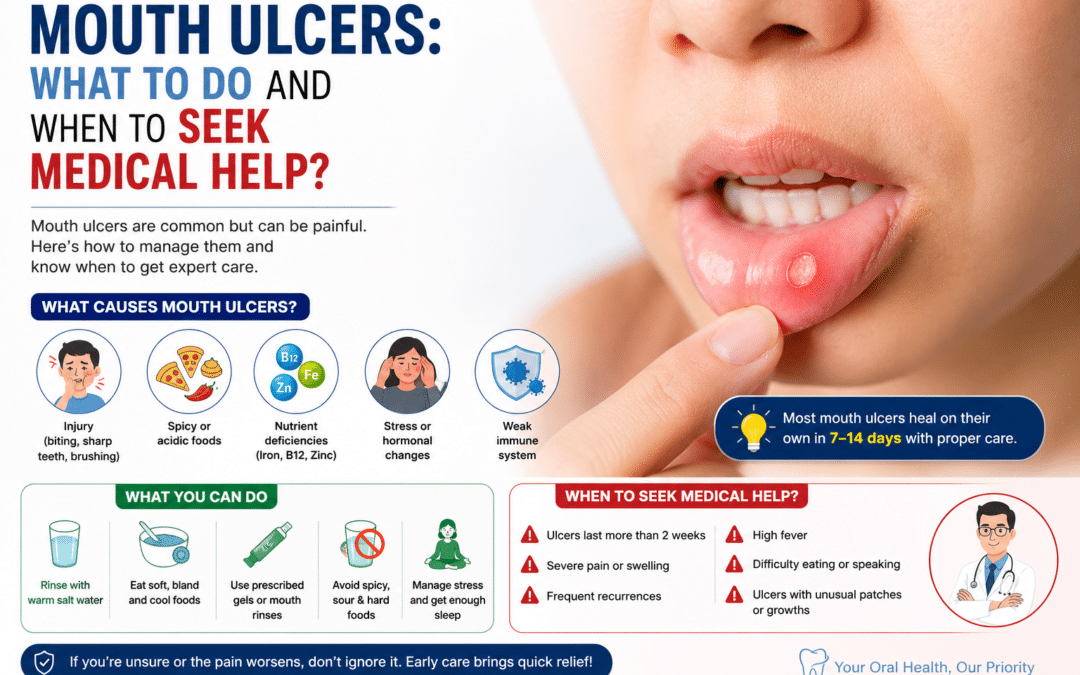
A mouth ulcer may look like a small sore, but it can cause considerable discomfort. Eating, drinking, brushing your teeth, and even speaking can become painful when an ulcer develops inside the mouth.
According to Dr. Jibreel Oysul of Meenakshi Super Speciality, Madurai, most mouth ulcers are harmless and heal on their own within one to two weeks. However, ulcers that persist, frequently recur, or occur along with other symptoms should not be ignored and may require medical evaluation.
What Is a Mouth Ulcer?
A mouth ulcer is a small, painful sore that develops on the soft tissues inside the mouth. It can occur on the inside of the cheeks or lips, tongue, gums, or the roof of the mouth.
Mouth ulcers may appear as round or oval sores with a white or yellowish centre and a red border. They can range from mild irritation to significant pain, depending on their size and location.
What Causes Mouth Ulcers?
There may not always be a single identifiable cause. Some common causes and triggers include:
- Accidentally biting the inside of the cheek or lip
- Minor injuries from sharp teeth
- Braces, dentures, or other dental appliances
- Burns caused by hot food or drinks
- Spicy, salty, or acidic foods
- Stress, anxiety, or lack of sleep
- Irritation from certain toothpastes or mouthwashes
- Nutritional deficiencies, including iron, folate, or certain vitamin deficiencies
- Hormonal changes
- Certain medications
- Some underlying health conditions
Sometimes, a mouth ulcer can develop without any obvious reason.
What Can You Do for a Mouth Ulcer?
Most minor mouth ulcers heal without specific treatment. However, some simple measures can help reduce pain and irritation.
- Maintain Good Oral Hygiene
Continue brushing your teeth regularly, but use a soft-bristled toothbrush and brush gently around the affected area.
Keeping your mouth clean can help maintain good oral health while the ulcer heals.
- Avoid Foods That Irritate the Ulcer
Until the ulcer heals, try to avoid:
- Very spicy foods
- Salty foods
- Sour or acidic foods
- Very hot food and drinks
- Hard or crunchy foods
Soft and cool foods may be easier and more comfortable to eat.
- Try a Warm Salt-Water Rinse
A simple salt-water rinse may help soothe the mouth and keep the area clean.
Mix half a teaspoon of salt in a glass of warm water, rinse your mouth, and spit it out. Do not swallow the solution.
- Stay Hydrated
Drink enough water throughout the day. If drinking is painful, cool or room-temperature fluids may be more comfortable than hot beverages.
- Manage Pain and Discomfort
Over-the-counter oral gels or mouthwashes may provide temporary relief. A doctor or pharmacist can advise you on an appropriate option.
For persistent, severe, or recurrent ulcers, Dr. Jibreel Oysul at Meenakshi Super Speciality, Madurai, can assess the ulcer and recommend treatment based on the underlying cause.
It is important not to use prescription medicines, including steroid preparations, without appropriate medical advice.
When Should You See a Doctor?
Most mouth ulcers improve within one to two weeks. However, medical evaluation is recommended if:
- The ulcer lasts longer than 2–3 weeks
- Mouth ulcers occur frequently
- The ulcer is unusually large or painful
- Multiple ulcers keep appearing
- The ulcer becomes increasingly painful, red, or swollen
- The ulcer bleeds without an obvious reason
- You have difficulty eating or drinking
- You develop a fever
- You have ulcers in other parts of the body
- You experience unexplained weight loss
- You notice a persistent lump or red or white patch inside the mouth
A persistent mouth ulcer does not necessarily mean cancer. However, an ulcer that does not heal should be examined by a qualified healthcare professional to identify the cause and rule out more serious conditions.
When Is Immediate Medical Attention Needed?
Seek immediate medical attention if you experience:
- Severe swelling of the mouth, lips, tongue, throat, or neck
- Difficulty breathing or swallowing
- Significant bleeding from the mouth that does not stop
- Severe illness associated with widespread mouth sores
- Mouth ulcers accompanied by extensive skin or eye blistering, particularly after starting a new medication
These symptoms may indicate a condition requiring urgent medical treatment.
How Can You Prevent Mouth Ulcers?
Although it is not possible to prevent every mouth ulcer, certain habits may reduce the risk:
- Maintain regular oral hygiene.
- Use a soft-brist