

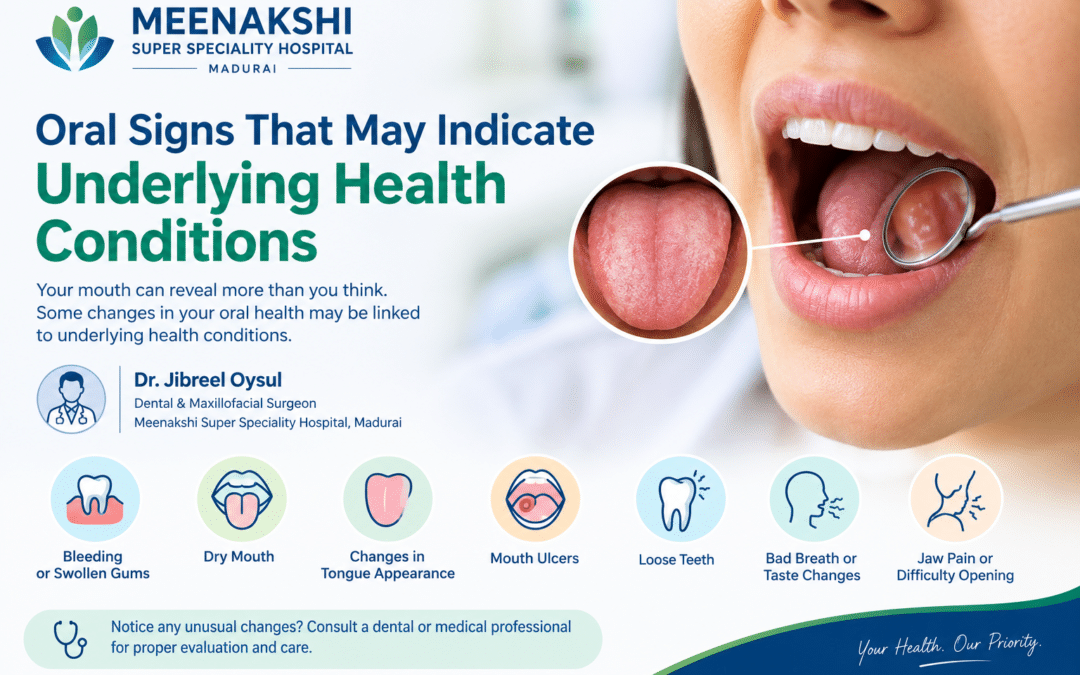
Your mouth can sometimes provide important clues about your overall health. Changes in the gums, tongue, teeth, or oral tissues may occasionally be associated with nutritional deficiencies, infections, diabetes, or other underlying health conditions.
While every oral symptom does not necessarily indicate a serious disease, persistent or unusual changes should not be ignored. Early evaluation by a dental or medical professional can help identify the cause and guide appropriate treatment.
- Bleeding or Swollen Gums
Occasional bleeding may occur due to improper brushing or flossing. However, frequent gum bleeding, redness, swelling, or tenderness can be signs of gum disease.
Persistent gum problems may also be associated with conditions such as diabetes, which can affect the body’s ability to fight infections and maintain healthy gums.
- Dry Mouth
A consistently dry mouth can make it difficult to speak, eat, or swallow comfortably. It may also increase the risk of tooth decay and oral infections.
Dry mouth can occur due to dehydration, certain medications, or some underlying health conditions. If it persists, a dental or medical evaluation can help determine the cause.
- Pale or Unusually Smooth Tongue
Changes in the appearance of the tongue can sometimes be associated with nutritional deficiencies. A pale or unusually smooth tongue may occur in people with iron or vitamin deficiencies, including certain types of anaemia.
If these changes continue, appropriate medical evaluation and blood tests may be recommended.
- White or Red Patches in the Mouth
White or red patches on the tongue, gums, cheeks, or other areas of the mouth can have several causes, including irritation, infections, or other oral conditions.
Any patch that does not heal, changes in appearance, or persists for more than two weeks should be examined by a qualified dental or medical professional.
- Frequent Mouth Ulcers
Occasional mouth ulcers are common and may heal on their own. However, frequent, painful, unusually large, or persistent ulcers may require further evaluation.
They can sometimes be associated with nutritional deficiencies, stress, infections, medications, or certain systemic conditions.
- Burning Sensation in the Mouth
A persistent burning or tingling sensation in the tongue, lips, or other parts of the mouth may have several possible causes.
It can sometimes be associated with nutritional deficiencies, dry mouth, oral infections, hormonal changes, or certain medications. A professional examination can help identify the underlying cause.
- Loose Teeth
Loose teeth in adults should not be ignored. Gum disease is one of the common causes, but bone loss and other oral or systemic factors may also contribute.
Early diagnosis and treatment can help protect the supporting structures around the teeth.
- Changes in Taste or Persistent Bad Breath
Persistent bad breath or changes in taste may be caused by poor oral hygiene, gum disease, dental infections, dry mouth, or certain dietary and medical factors.
If these symptoms continue despite maintaining good oral hygiene, professional evaluation is advisable.
- Jaw Pain or Difficulty Opening the Mouth
Persistent jaw pain, discomfort while chewing, or difficulty opening the mouth can be associated with dental infections, temporomandibular joint problems, or other conditions.
A proper examination can help determine the underlying cause and appropriate treatment.
When Should You Consult a Doctor or Dentist?
It is important to seek professional advice if you notice:
- Oral ulcers that do not heal
- Persistent white or red patches
- Unexplained bleeding or swelling
- A lump or unusual growth in the mouth
- Persistent pain or numbness
- Difficulty swallowing or speaking
- Unexplained loose teeth
- Long-lasting changes in the tongue or oral tissues
These signs do not automatically mean that you have an underlying disease. However, persistent symptoms should be evaluated rather than self-diagnosed.
Protect Your Oral and Overall Health
Maintaining good oral hygiene, brushing twice a day with fluoride toothpaste, cleaning between the teeth, having regular dental check-ups, eating a balanced diet, and avoiding tobacco can support better oral health.
Your mouth can sometimes provide early clues about changes happening in your body. Paying attention to unusual oral symptoms and seeking timely professional advice can help with early detection and appropriate care.
Dr. Jibreel Oysul
Meenakshi Super Speciality Hospital, Madurai
If you notice persistent changes in your mouth, consult a qualified dental or medical professional for proper evaluation and diagnosis.